
Between Two Cultures: Chinatown, Renewal, and the Work of Belonging
Lunar New Year, and why this Year of the Horse story mattered.
Why Chinatown Pulls Me Back
Every Chinese New Year, I find myself pulled back to Chinatown. Not because it’s trendy or picturesque, but because it feels like one of the last places in New York that still tells the truth. Chinatown is loud, a little smelly, and very much alive. It doesn’t wait for you and it doesn’t soften itself. People walk with purpose and ply their trade on every block - vendors hawking fake designer bags,
food carts serving, conversations happening in passing. It’s the city in overdrive.
Chinatown has been a constant for me through different chapters of my life. It’s where I copped mixtapes and bootlegs in the early 2000s, where I took friends for their first dim sum and watched as they chuckled with their chopsticks, and where I used to wander through cases of counterfeit watches (perusing and dreaming - but not buying!) long before I could afford a Rolex. Even those memories feel like New York: ambitious, resourceful, and aspirational.
Between Two Cultures

A lot of people don’t realize I’m half-Chinese. I don’t lead with it. Not because I’m hiding it, but because my relationship to identity has never been simple. A piece of that complexity is that my mother is Italian. And for a long time, I felt like I was never Chinese or Italian enough. I lived in this cultural no-man’s land where people’s assumptions did most of the talking, and I was left trying to translate myself in real time. That tension shaped me. It made me hyperaware of who feels comfortable in a room and who’s silently doing the math of whether they belong.
Identity doesn’t always resolve cleanly, and heritage isn’t always straightforward. When people learn I’m half-Chinese, they might assume that I felt at home in Chinese spaces. The truth is, I rarely did. I didn’t look like other Chinese kids. I didn’t speak the language. And there’s a specific kind of loneliness that comes from feeling like you have to prove yourself in the very places that are supposed to be yours.
At the same time, I understood the culture fluently because I lived it. I was raised in a three-generation household with my parents, sister, grandmother, two aunts, an uncle, and a cousin who's more like a brother. The food, the values, the rituals, the etiquette (you better take those shoes off) —that was home. Still, for a long time I thought belonging meant going further, so I leaned all the way in. I studied Mandarin and Chinese caligraphy in high school and in college. I studied abroad in China for a summer. A big part of me believed these experiences would help me be recognized and accepted as being Chinese.

What Those Years Shaped in Me
Growing up in Brooklyn in the 80s and 90s, in a neighborhood that was very Black and white, there weren’t many mixed kids, or Asians for that matter. And I was constantly reminded that I was different. Sometimes it was loud—name calling, shouting, fights. I learned that in those moments, I could shrink or swing. Being my father’s son, I swung more often than I shrunk. But sometimes it was quiet. Comments that sounded harmless to onlookers but stuck with me, the kind that made me replay a moment later and think, wait…what did they mean by that?
The loud racism was damaging, but the quiet kind did something else. It made me feel like I was always scanning. Like I could never fully relax. Like belonging was something I had to earn, and even then it could be taken away. Over time, I became obsessed with building spaces where people didn’t have to carry that feeling.
That commitment shaped my life and my career. Before Complecto, I spent 18 years working at some of the most influential companies in the world, helping build cultures where people from all backgrounds could feel like they belonged and thrive in spaces that weren’t built with them in mind. I understood, intuitively, just how much human potential could be unlocked by simply making people feel seen and valued, and treating them equitably.

Why I Built Complecto
Eventually that path led me to found Complecto in 2022. It started with watches, but it was never just about watches. It was about values: diversity, inclusion, belonging, access, and community. It was also about ensuring that voices and perspectives that have historically been overlooked aren’t simply “invited in,” but treated as part of the room by default. I wanted people to show up and feel it immediately: “I belong here.” Not as a guest. Not as an exception or novelty, but as the rule.
I also wanted brands and the industry at large to understand something that often gets missed: the opportunity here isn’t just reaching “new customers.” It’s learning how to engage sincerely, openly, curiously, and authentically. When you do that, it isn’t charity. It isn’t performative. It isn’t a marketing trend. It’s good business. It makes the work better, the product story richer, and it moves the industry forward.
Storytelling is the mechanism that makes all of that real. Values don’t land when you state them; they land when people feel them. They land when culture isn’t treated like an aesthetic or a box to check, but like lived experience, history, and context. That’s what we strive to do at Complecto with our community and with our partners.

We don’t just document products. We build narratives around people, place, and meaning. We translate craft into something human. We create rooms and content where the conversation expands, where people can see themselves, and where new voices aren’t treated as exceptions. When it works, it doesn’t feel like marketing. It feels like truth, because it is.
Chinatown is the clearest example I know of what that looks like in real life. It’s a neighborhood defined by the cultures of the people who built it. It lives in the everyday: the pace of the streets, the storefronts, the food, the rituals, the way people go about their business. It's a place that has always given me something I didn’t always feel growing up: space. It lets you experience the culture on your own terms, moving through anonymously as one of a thousand people on Canal Street, or getting fully immersed over a warm bowl of noodle soup with friends. There aren’t many places that hold both of those truths at once.

The Year of the Horse, and the Story We Told
When Bulova created the limited-edition Super Seville honoring the Year of the Horse, it didn’t feel like just another cool watch moment. It felt like an opportunity to return to a place that shaped me and to tell a story that held both personal meaning and universal truth.
In Chinese culture, the Horse is associated with momentum: independence, courage, and forward motion. It’s energetic and restless in the best way—always moving, always chasing what’s next. That symbolism felt especially fitting for this story, because Chinatown (and New York in general) has always rewarded people who keep going.

Lunar New Year is about renewal and continuity - honoring what came before, while stepping into what’s next with intention and gratitude. You see it in storefronts and symbols, in food and red envelopes, in the way families come together. And even if your story isn’t Chinese, the deeper truth translates: the desire to belong, to carry something forward, to build something better for the people you love.
Chinatown isn’t just a neighborhood, it’s proof of what happens when people come here to build better lives. Proof of community as infrastructure. Proof of tradition surviving change. Proof that identity can be preserved, adapted, and still thrive in the face of adversity. That’s why this mattered to me. Not because it was a cool project with a brand I love, but because it was a chance to honor a place that helped me understand myself.
To everyone celebrating Lunar New Year, I hope you feel held by your people and proud of what you carry. And if you ever find yourself in Chinatown, walk slowly. Eat something delicious. Look up at the signs. Pay attention to the details. Just don’t stop in the middle of the sidewalk and hold people up, because don’t nobody got time for all that. It’s New York, after all.
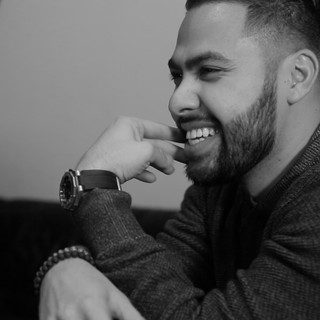
Model + Creative Direction: Jason Gong (@wristshotnyc).

I've been exploring this AI presentation tool, and I'm impressed by how easy it is to create polished presentations. Beyond the AI features, the template collection is really useful, especially the Presentation Backgrounds, Christmas Templates, Marketing Plan Template, Cute & Aesthetic Presentation Templates, and Project Proposal Template. Overall, Havi is a great option for anyone looking to build attractive, professional slides with minimal effort.
Thank you for sharing this Jason, it was a great read and I appreciate you creating a space like complecto for all of us to be welcomed
A sense of belonging is the essence of humanity. Thank you for sharing. You are much appreciated by our community. Hope to see you soon at an event in Virginia.
Dope piece, Jason (the blog and the watch)!